When employees leave the building for meals or jump to using third party digital ordering apps such as Uber Eats or DoorDash, the impact goes far beyond food. Productivity drops, lines form at security desks, break schedules stretch, and the value of an on-site dining program and cafeteria service quietly erodes.
The good news is that corporate dining (usually) does not lose this battle because of food quality. It loses because of convenience.
Digital ordering, through iOS, Android, or web-based applications, helps employers take that advantage back, keeping revenue in house and allowing employees to use their badges or credit cards to process payments for their onsite meals.
For hospitals, corporate office buildings, and manufacturing plants, apps, web ordering, self-service kiosk solutions, and self check-out systems are the key to keeping dining in-house and strengthening employee loyalty.
The Real Cost of Off-Site Food Delivery
Third-party delivery platforms introduce friction that most employers never see on a balance sheet.
When employees order off-site, employers deal with:
- Longer breaks and delayed shift returns
- Reduced participation in on-site dining
- Lost opportunity to reinforce culture and community
- No visibility into spend, preferences, or demand
In hospitals and manufacturing plants, where timing and coverage matter, even small delays can ripple across operations.
The issue is not preference. It is speed and control.
Digital Ordering Competes on Convenience
Employees use Uber Eats because it is easy. Online ordering for corporate dining needs to be easier.
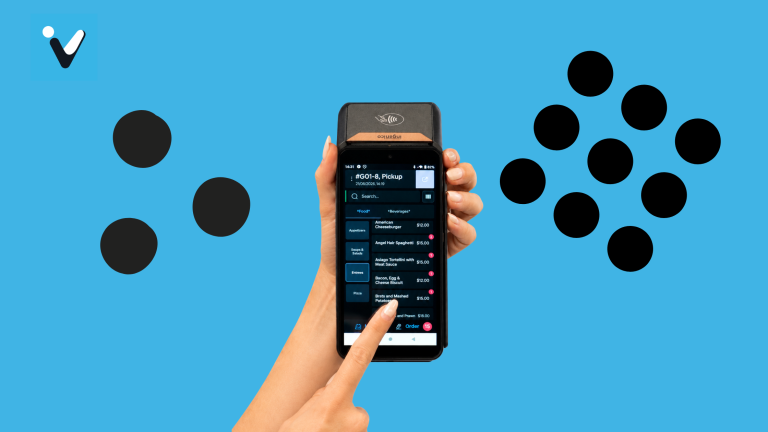
With mobile apps and web ordering, employees can place orders ahead of time, customize meals, and choose pickup windows that align with breaks and shift changes, as seen in the Volante Eats app. There is no waiting, no delivery uncertainty, and no extra fees. Back of house operators are granted full control over order thresholds, lead times, and sending push notifications when orders are prepared.
When in-house dining matches the convenience of delivery apps, employees stop looking outside the building. By adding badge pay as a payment method, employees do not need to worry about carrying their wallet at any point, making the process even more convenient than third party delivery or heading to the coffee shop nearby.
Self-Service Kiosk and Self Check-Out Options Remove Line Anxiety
Lines are the fastest way to send employees back to DoorDash.
Self-service kiosk stations let employees walk up, order, and pay in seconds. Add self check-out and the process feels closer to a modern retail experience than a traditional cafeteria. These tools also allow operators to leverage weight scales for salad bars or items that are being priced by weight.
This matters because:
- Short lines keep employees on schedule
- Faster throughput protects break compliance
- Reduced congestion improves safety and flow
When employees know they can get in and out quickly, they choose on-site dining every time.
Payroll Deduction Eliminates the Payment Decision on Digital Ordering
Off-site delivery always requires a payment decision. In-house dining does not have to.
Payroll deduction and badge pay remove friction at the point of sale by letting employees pay through their paycheck. No cards, no wallets, no checkout hesitation.
This is especially effective in hospitals and manufacturing plants, where speed and simplicity matter more than novelty.
The result is higher adoption of on-site dining and fewer reasons to open a delivery app.
Meal Plans That Make Leaving the Building Illogical
Meal plans anchored to digital platforms give employers a powerful retention lever.
With declining balance meal plans, employees start with a set dining value that encourages regular on-site use. With inclining balance models or payroll deductions, employers can allow employees to accumulate balances and have them removed from their pay checks, with the ability to set limits based on employee type along with item restrictions.
When meal plans are integrated into online ordering and self-service kiosk systems, employees naturally default to in-house dining. Ordering elsewhere feels like leaving value on the table.
Data Visibility Third Party Digital Ordering Delivery Apps Will Never Share
Uber Eats and DoorDash keep the data. Corporate dining platforms give it back.
Digital ordering tools provide insight into:
- Peak times and traffic patterns
- Menu performance by shift or location
- Spend tied to payroll deduction and meal plans
- Adoption of self check-out and kiosk usage
- Favorite and least favorite menu items
This data helps employers and operators fine-tune menus, staffing, and pricing so the in-house experience keeps getting better.
In-House Dining and Digital Ordering Builds Employee Loyalty, Not Just Full Stomachs
Food delivery is transactional. Corporate dining is relational.
When employees rely on an on-site program that respects their time, simplifies payment, and delivers consistency, it sends a message. The employer is investing in their daily experience, not outsourcing it.
That connection builds employee loyalty in a way third-party apps never will.
The Bottom Line
Keeping dining in-house is not about banning delivery apps. It is about making them unnecessary.
Online ordering, self-service kiosk technology, self check-out, payroll deduction, and flexible meal plans using declining balance and inclining balance models allow corporate dining to compete directly with Uber Eats and DoorDash on convenience.
When on-site dining is faster, easier, and already paid for, employees stay in the building. Productivity improves. Culture strengthens. And the dining program finally delivers the return it was designed for.
Interested in seeing how Volanté’s retail dining technology could work in your building?
Reach out to Volanté at 1.877.490.6333 ext. 3.